If you’re looking for the most complete guide to surf spots in Vietnam, this article breaks it down region by region.

Most people can name two: My Khe in Da Nang and maybe Mui Ne. But Vietnam’s 3,000 km of coast holds far more than that — quiet reef setups in Phan Rang, windy beach breaks off Doc Let, even the southern wraps of Back Beach near Vũng Tàu that light up on certain swells. You just have to know where to look.
This guide is your shortcut: a hand-picked map of Vietnam’s real surf spots — the busy ones, the overlooked ones, and the ones with no one out but you and the wind. Each with its own vibe, break style, crowd level, and “is it worth it?” factor.
Whether you’re a beginner riding foam or a nomad chasing emptier waves than Bali ever had, this is where you start: spot by spot, coast by coast, from Da Nang to Phu Quoc and back.
If Da Nang is your first stop and you want help reading the waves, a Da Nang surf lesson can make your first session safer, calmer, and easier to understand.
From reef breaks to mellow beach waves, these are truly the best surf spots in Vietnam.
Surf Spots in Vietnam: Locations, Maps & Coordinates
🏄 Central Coast: Da Nang & Hội An
For a closer look at the city coastline, see our map of nine urban Da Nang surf spots. It separates My Khe and the surrounding coast into practical beach areas instead of showing the entire city beach as a single point.
📍 My Khe Beach Surf Spot, Da Nang
- Wave type: Beginner-friendly beach break, sandy bottom.
- Best season: November–March.
- Wave size: Typically waist- to chest-high (0.8–1.2 m).
- Conditions: Glassy at sunrise, mild NE winds mid-morning.
- Facilities: Numerous board rentals (from $8/hour), cafés, surf schools.
- Coordinates:
16.0549°N, 108.2498°E - 📌 Open in Google Maps
Early mornings here are magical: the sun rises directly over the water, casting golden light on a long stretch of gentle waves and soft sand. Locals jog past monks collecting alms, while surf students line up under colorful tents. The beach buzzes without feeling crowded, and the atmosphere is welcoming — no judging looks, no aggressive locals, just warm water and easy smiles. You can rent a board, take a lesson, and be paddling out in under ten minutes. Ideal for getting your first wave or easing back into rhythm after time off.
📍 Non Nước Surf Spot, Da Nang
- Wave type: Intermediate beach break, more powerful than My Khe.
- Best season: November–March.
- Wave size: Chest- to head-high (1–1.8 m).
- Conditions: Best with incoming tide and NE swell. Watch for strong rip currents.
- Facilities: No rentals on-site—bring your own board from My Khe or Da Nang.
- Coordinates:
15°59'09.2"N 108°16'27.1"E - 📌 Open in Google Maps
This spot feels wilder. You’ll walk through a quiet stretch near Marble Mountain, past drifting incense smoke from local temples, and emerge onto an open beach where waves punch with more force. Fewer people surf here — and those who do often come to challenge themselves. It’s a great place to practice trimming or trying your first real turns once you’re comfortable on green waves. Bring your own board, some snacks, and expect a more solitary, soulful surf experience.
📍 Nam Ô Reef Surf Spot, Da Nang
- Wave type: Reef break, left-hand point, advanced surfers only.
- Best season: December–February (requires larger swells).
- Wave size: Consistent head-high+ (1.5–2 m), can produce hollow sections.
- Conditions: Mid to high tide optimal. Booties recommended.
- Facilities: Basic parking area, no rentals.
- Coordinates:
16°07'01.6"N 108°05'48.5"E - 📌 Open in Google Maps
Nam Ô doesn’t give up its rewards easily. You park in a small fishing village, nod to the elders watching your scooter, and make your way across dark volcanic stones. But when the conditions align, the payoff is one of Vietnam’s rarest waves — a sharp, fast, left-hand reef that breaks with real power. The lineup is often just two or three riders, the vibe quiet and focused. It’s not for everyone, but if you’re experienced and looking for the thrill of something unspoiled, this is your wave.
📍 An Bàng Surf Spot, Hội An
- Wave type: Easy-going longboard spot, perfect for beginners.
- Best season: November–March.
- Wave size: Knee- to waist-high (0.5–1 m), gentle slope.
- Conditions: Best early morning with offshore breeze.
- Facilities: Board rentals near Sound of Silence Café (~$8/2 hrs), casual vibe.
- Coordinates: 15°53’38.9″N 108°22’33.0″E
- 📌 Open in Google Maps
Just a 10-minute ride from the lantern-lit old town, An Bàng offers an escape that feels like another world. Wide beach, low-key surf crowd, and small, rolling waves make this the place to slow down. Yoga cafés line the shore, and you can sip a smoothie with sandy toes after a mellow session. It’s especially loved by travelers learning to surf or just craving peace with a board under their feet. If your soul needs unwinding more than adrenaline — start here.
🏄 South-Central Coast: Nha Trang–Phan Rang
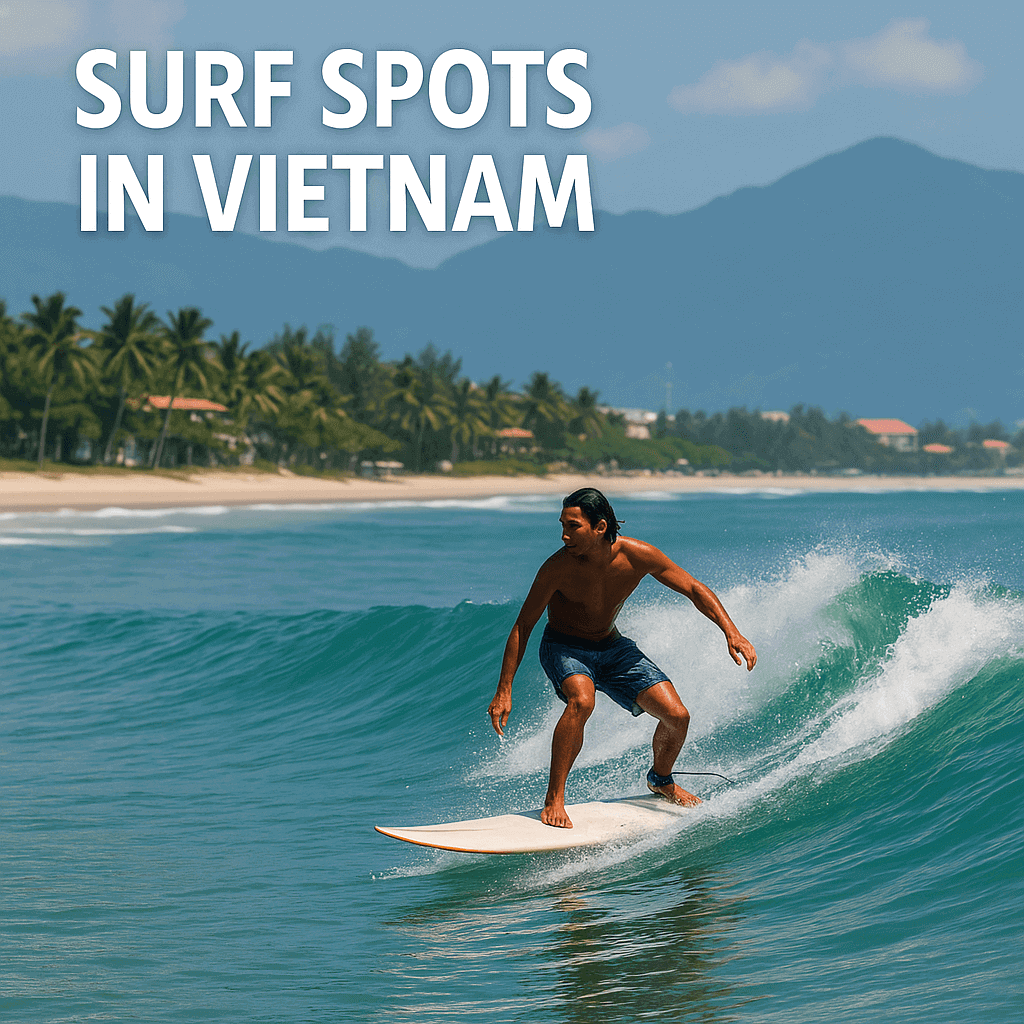
📍 Bãi Dài Surf Spot, Cam Ranh (near Nha Trang)
- Wave type: Beginner/intermediate beach break, long sandy beach.
- Best season: November–March.
- Wave size: Waist- to chest-high (1–1.5 m).
- Conditions: Empty lineups, gentle peaks, ideal for learning.
- Facilities: Surf school rentals available.
- Coordinates:
12°06'55.1"N 109°11'47.0"E - 📌 Open in Google Maps
Picture a 15-kilometer beach with barely a building in sight, just rows of whispering pines and the occasional hammock strung between poles. That’s Bãi Dài. On good days, gentle peaks roll in endlessly — plenty of space to catch waves without worrying who’s watching. It’s a great place to disconnect, surf without pressure, and get back in touch with why you started. And if you’ve never surfed before? This is one of the easiest places in Vietnam to try.
📍 Doc Let Surf Spot, north of Nha Trang
- Wave type: Punchy beach break, intermediate surfers.
- Best season: November–March.
- Wave size: Chest- to head-high (1–1.8 m).
- Conditions: Strong NE swell required, no facilities—bring your own gear.
- Coordinates:
12°33'00.0"N 109°13'40.1"E - 📌 Open in Google Maps
Doc Let is for explorers. The beach is remote, the sand almost white, and the sea turns a deep turquoise in the morning light. On stronger swells, the waves get punchy — a good test for intermediates or confident beginners. You’ll likely surf alone, with only the rustling palms and distant boats for company. There are no shops on the sand, no board rentals — just nature and raw ocean energy. It’s what surf travel used to feel like.
📍 Phan Rang “Phantoms” Reef
- Wave type: Advanced reef break, hollow left-hander.
- Best season: December–March (rarely breaks otherwise).
- Wave size: Head-high+ (1.5–2.5 m) barrels.
- Conditions: Mid to high tide optimal, shallow sharp reef.
- Facilities: None. Bring booties, helmet recommended.
- Coordinates:
11°34'30.0"N 109°00'15.1"E - 📌 Open in Google Maps
This is a spot you hear about in whispers — “it fired last week,” someone says. Located near a windy lagoon known for kitesurfing, Phantoms is a rare beast: a reef that delivers real barrels when long-period northeast swells collide with offshore winds. The paddle out is tricky, the reef is sharp, and the lineup is mostly quiet — sometimes too quiet. But catch it on the right day and you’ll remember it for years. Not a place to experiment. A place to level up.
🏄 Southern Coast & Islands
📍 Malibu Surf Spot, Mui Ne
- Wave type: Small, playful beach break, good for beginners & intermediates.
- Best season: October–April.
- Wave size: Waist-high (~1 m).
- Conditions: Early mornings before wind; afternoons dominated by kiteboarding.
- Facilities: Board rentals in local village, cafés nearby.
- Coordinates:
10.9506°N, 108.2614°E - 📌 Open in Google Maps
This isn’t California’s Malibu — it’s better in its own way. In the early morning, before the wind kicks up and kite sails fill the sky, the ocean here is smooth and inviting. The surf is small but playful, and the backdrop of colorful boats and early market buzz adds charm to your session. Beginners feel at home, and returning riders appreciate the rhythm: surf early, eat well, nap hard. It’s Vietnam’s take on the good life, board under arm.
📍 Back Beach Surf Spot, Vũng Tàu
- Wave type: Occasional clean waves, beginner/intermediate.
- Best season: October–April.
- Wave size: Waist- to shoulder-high (0.8–1.5 m).
- Conditions: Best on larger NE swells, often wind-affected in the afternoon.
- Facilities: Surf rentals, surf club, restaurants.
- Coordinates:
10.3182°N, 107.0962°E - 📌 Open in Google Maps
If you’re in Saigon and missing the ocean, this is where you go. A two-hour trip lands you on a long crescent of beach where locals play volleyball, kids fly kites, and, yes, waves wrap around the headland when a good swell hits. It’s not always clean, but when it is, Back Beach surprises: long, glassy lefts and an after-surf scene with beach clubs and cheap eats. It’s the kind of place where city surfers learn to love weekends again.
📍 Long Beach Surf Spot, Phú Quốc
- Wave type: Rarely surfable, mostly flat or SUP suitable.
- Best season: November–February (rare storms).
- Wave size: Usually below waist-high (< 0.7 m).
- Conditions: Occasional wind swells, mostly calm.
- Facilities: Resorts with SUP and kayak rentals.
- Coordinates:
10.2186°N, 103.9615°E - 📌 Open in Google Maps
Long Beach is less about chasing perfect waves and more about soaking up island time. Most of the year, it’s dead flat — ideal for SUP, snorkeling, or just floating. But once in a while, a rare typhoon swell pushes waist-high peelers into the bay. If you’re already here, already barefoot, and the sea starts to move — grab a board and go. It won’t last, but it will feel special because it’s unexpected. That’s Long Beach.
🚩 Quick Surf Spot Reference:
| Experience Level | Recommended Surf Spots |
|---|---|
| Beginner-friendly | My Khe, An Bàng, Bãi Dài, Malibu (Mui Ne) |
| Intermediate surfers | Non Nước, Doc Let, Back Beach |
| Advanced surfers | Nam Ô Reef, Phantoms Reef (Phan Rang) |
👉 Want even more surf spots in Vietnam? Check out Surfline’s Vietnam page for real-time reports, swell forecasts, and a broader list of surf locations across the coast.
Best surf spots in Vietnam → FAQs
Is Vietnam good for surfing if I’m a beginner?
Yes — Vietnam’s Central Coast is perfect for beginners. Spots like My Khe (Da Nang) and An Bàng (Hội An) offer soft sand-bottom waves, gentle size (0.6–1.2 m), warm water, and English-speaking instructors. You don’t need a wetsuit — just sunscreen and a foamie.
Where is the best surf spot in Vietnam?
The most consistent all-around spot is My Khe Beach in Da Nang. It offers reliable beach break waves from November to February. For advanced surfers, the reef at Nam Ô and the rare left-hander “Phantoms” in Phan Rang offer heavier, longer rides when swell conditions align.
Is Da Nang safe for surfing?
Yes — Da Nang is generally safe for surfers. My Khe has lifeguards, clear swim flags, and gentle currents under 1 m swell. Avoid surfing during typhoons (October–early November) or on strong onshore wind days, when the water turns rough and visibility drops.
Can you surf in Hội An?
Yes — Hội An’s An Bàng Beach gets fun, mellow waves during the winter season (Nov–Mar). Ideal for longboards and beginner practice. It’s less consistent than Da Nang, but worth checking if swell is up. If it’s flat, Da Nang is just a 40-minute scooter ride away.
Is Phú Quốc good for surfing?
Not really. Phú Quốc sits in the Gulf of Thailand and gets very little swell. Small waves may appear from November to January, but they rarely reach 0.7 m. It’s better for SUP or swimming. Serious surfers should look to Da Nang, Mui Ne, or Phan Rang instead.
How much is surfboard rental or a lesson in Vietnam?
As of 2025, surfboard rentals cost around 200k VND/hour ($8) at beach tents or less if you rent for the week. Group lessons cost 600k–850k VND ($25–$35), depending on the school and location. Weekly packages offer better value, especially in Da Nang and Mui Ne.
When is the best time to surf in Vietnam?
Vietnam’s surf season varies by region. Central Coast (Da Nang, Hội An): November to March. South-Central (Nha Trang, Phan Rang): November to March. Southern Coast (Mui Ne, Vũng Tàu): October to April. Outside these months, swell is unpredictable or wind-blown.
What is the longest wave in Vietnam?
The longest beach ride is at Mui Ne’s Fishing Harbor, where a good sandbar can offer 100–150 m runs on a longboard. For advanced riders, Phan Rang’s reef “Phantoms” produces Vietnam’s longest, heaviest lefts — but only during rare winter swell windows.
Is it safe to surf alone in Vietnam?
It’s safe at patrolled beaches like My Khe or Bãi Dài, but reef spots like Nam Ô and Doc Let are remote. If surfing solo, go during daylight, tell someone your plan, and wear reef booties. Shark attacks are unheard of, but jellyfish appear in late spring.
Do you need wind to surf in Vietnam?
No — wind actually ruins the waves. The best surf sessions happen early morning, before sea breeze kicks in. If whitecaps appear by 10 AM, the surf is likely blown out. Vietnam’s waves rely on swell, not wind — unlike kitesurfing, which thrives in windier conditions.