

…so you do not get burned, freeze, or buy gear you do not actually need ☝️
The water in Da Nang stays warm for most of the year. It is an open beach break with no rocks. Rip currents here are real, and how you feel during a surf session depends not only on water temperature, but also on the wind, the length of your session, the strength of the sun, and how long you stay wet on an exposed stretch of coast.
That is why the smartest basic choice for what to wear surfing in Da Nang is a long-sleeve rash guard for surfing with more coverage on the bottom as well. This kind of setup solves several problems at once: it reduces sun exposure, helps prevent chafing against the board, and gives at least partial protection from things in the water that can irritate your skin.
In winter, a full wetsuit is usually not necessary, but on windy mornings or during a long session, a thin neoprene layer can make you feel much more comfortable. On days when jellyfish show up, clothing only helps partially: it simply reduces the amount of exposed skin.
Below is a closer look at skin risks in the water and the best surf clothing for Da Nang.
If you are a beginner surfer, it is also useful to know how to tell where the waves are good today.
Why You Need Protection in the Water

In Da Nang, you need protection from cumulative sun exposure, wind on wet skin, and constant rubbing against the board. That is just part of surfing on an open sandy beach break: lots of paddling, lots of wipeouts, lots of time on the water surface, and lots of exposed skin.
The most underrated risk is the sun. The World Health Organization recommends sun protection starting from a UV index of 3 and above. In Da Nang, UV stays high for most of the year. Some climate summaries show an average maximum UV index of around 5–7, with the lowest period in January, November, and December, and the highest from April to September. Other summaries show daytime peak UV levels in Da Nang reaching 8–11+, which is considered very high to extreme.
And it feels stronger on the water. You get direct sun from above, reflection off the surface, and you often stay out longer than it looks from the beach.
That is why surf clothing here is not about style. It is practical protection. One long-sleeve rash guard already solves several problems at once: it covers your shoulders, back, and arms from the sun, reduces chafing against the board, and simply makes the session more comfortable. If you rely only on sunscreen, it quickly becomes inconvenient. The American Academy of Dermatology recommends water-resistant sunscreen of at least SPF 30, but even that needs to be reapplied every two hours, and again after swimming or heavy sweating. That is also why surfers often use zinc on the face.
About Zinc on the Face
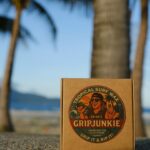
What surfers usually call just “zinc” is a thick mineral sunblock based on zinc oxide. It is mainly applied to the nose, cheekbones, upper cheeks, forehead, and sometimes the ears — the areas that catch the most sun and burn first. Mineral protection with zinc oxide tends to stay on the skin more reliably, even in the water.
There is also a more basic factor: friction. A beginner in Da Nang almost always spends a lot of time lying on the board with the chest, stomach, thighs, and inner arms touching the surface. On a soft beach break, a session is rarely just a couple of clean rides. More often, it is dozens of attempts, and with minimal clothing, the skin gets irritated very quickly. A rash guard and covered bottoms work as mechanical protection against chafing.
And one more thing many people underestimate is wind on a wet body. In winter, thin neoprene in Da Nang is not about the water being “cold.” It is about how much faster your body cools down once you are wet and sitting in the wind. Without the right clothing, you get tired sooner, start feeling cold faster, lose focus, and enjoy the session less.
Which Clothing Brands Work Well for Surfing

If you want surf clothing that lasts at least a couple of seasons, look at brands that make real surf and waterwear, not just generic “beachwear.”
Rip Curl and O’Neill are a solid starting point if you want a proven surf setup. They usually have a strong range of rash guards for regular surfing.
With O’Neill, it also makes sense to look beyond rash guards and check their thin neoprene options. The brand makes lightweight 1–1.5 mm neoprene tops and short 2 mm spring suits — exactly the kind of gear that can be useful in Da Nang in winter, when the water is still warm but the wind starts affecting comfort more.
Patagonia is worth considering if durability and better sun coverage matter to you. For example, they make the RØ Surf Hoody, a hooded long-sleeve surf top with quick-drying fabric and UPF 40+ protection. That is not just about the torso — it also helps cover the head, neck, and skin during long sessions. For anyone looking for UPF clothing for surfing, this type of option makes a lot of sense.
Quiksilver, Roxy, and Billabong are all good choices if you want reliable mid-range gear: rash guards, warm water surf clothing, short neoprene, and practical surfwear for normal sessions without going too far into highly technical equipment.
If you are thinking specifically about head protection, it is better to look at actual surf caps and hats with a secure fit rather than a normal cap. Here, brands like Dakine are useful because they focus on products made for the water, not just for the beach look. A proper surf hat for sun protection is much more practical than a regular cap once you are paddling, duck diving, and getting worked by waves.

Among local brands, REX-FEX deserves a special mention. It was created by a surfer family specifically for tropical conditions in Vietnam. The brand already makes a neoprene surf cap with a chin strap, drainage mesh around the ears, and an adjustable back section that is also convenient for long hair. They also make a hooded rash guard with a visor, UPF 50+ protection, flat seams, and more complete coverage for the head, neck, and arms. So REX-FEX is interesting as a brand that really addresses tropical surf problems: strong sun, a wet head in the wind, long sessions, and skin protection in the water.
Common Mistakes
The biggest mistake in Da Nang is wearing too little in the water. Do not rely only on sunscreen. During a surf session, it stops working as reliably as it does on shore. That is why a long-sleeve rash guard and, if needed, a surf cap are more useful than they may seem. A full wetsuit is usually unnecessary here, but in winter mornings, on windy days, or during long sessions, a thin neoprene layer can make a big difference in comfort.
Two other common mistakes are thinking that a rash guard gives full jellyfish protection, and taking a normal cap into the water. A rash guard reduces the risk, but it does not give complete protection. A regular cap without a secure strap gets knocked off by the first decent wave, and looking for it in the water with a board under your arm is not very fun.
FAQ About Surf Clothing in Da Nang
Do I need a wetsuit in Vietnam for surfing in Da Nang?
Usually no. The water in Da Nang is warm for most of the year, so a full wetsuit is more the exception than the rule. But in winter, especially in the morning, in the wind, or during a long session, some people genuinely feel better in a thin neoprene top, a shorty, or a spring suit. So the real question is not “can I survive without a wetsuit?” but “how comfortable do I want to be in the water?” If you are asking do I need a wetsuit in Vietnam, Da Nang is one of those places where most surfers can manage without a full one.
Is a rash guard enough for surfing in Da Nang?
For most beginners, yes. The most practical basic setup here is a long-sleeve rash guard and proper bottoms: boardshorts, surf leggings, or something similar. This combination covers several needs at once: less sun, less chafing against the board, and more comfort in the water.
What should a beginner wear for a first surf lesson in Da Nang?
The most practical option is a long-sleeve rash guard and comfortable bottoms that stay in place and do not restrict movement. For a first lesson, that is usually enough. It is also a good idea to apply water-resistant sunscreen to exposed skin. If the lesson is long or the sun is strong, a surf cap can also be a very smart addition.
Do I need long sleeves if the water is already warm?
Yes — and in Da Nang, it is often a smarter choice than people expect. Warm water does not cancel out strong sun, glare off the surface, and long sessions. In fact, people often underestimate UV exposure more in warm water. So a long-sleeve rash guard here is not “too much clothing.” It is normal basic protection. This is one of the key things to understand when thinking about what to wear surfing in summer in a tropical place.
Do I need a surf cap or surf hat in Da Nang?
Not always, and not for everyone, but in many cases — yes. If you surf in the middle of the day, stay in the water for a long time, burn easily, or spend a lot of time on a longboard, SUP, or in surf lessons, a surf cap or surf hat for sun protection is absolutely reasonable. The main thing is that it must actually stay on in the water. A normal cap without a secure fit is almost useless for surfing.
Can I surf in leggings?
Yes, and for Da Nang it is actually a very practical option. Leggings give you more coverage, which means less sun on your legs, less skin irritation, and a bit more protection on days when there is something stinging or just unpleasant in the water. For beginners and for long sessions, this is often more comfortable than a very exposed setup.
Are there jellyfish in Da Nang, and does clothing help?
Yes, this does happen from time to time, but it does not mean the sea is “always dangerous.” A better way to put it is that jellyfish here are occasional, not constant. Covered surf clothing helps at least by reducing the amount of exposed skin and lowering the chance of direct contact. But it is not armor. Thin fabric does not provide full jellyfish protection clothing, and the answer to can jellyfish sting through rash guard is basically yes — sometimes they still can. So do not think of a rash guard as total immunity.
Do I need surf booties in Da Nang?
Usually no. Most surfing here happens on a sandy beach break, not on reef, so booties are an unnecessary purchase for most beginners. They may be useful in a few rare situations, but they are definitely not part of the basic Da Nang setup.
Final Thought
If you are wondering what to wear surfing in Vietnam, Da Nang gives you a pretty clear answer: keep it simple, light, and practical. For most people, the best setup is a long-sleeve rash guard, comfortable covered bottoms, sunscreen, and sometimes a surf cap. In summer, focus on sun and skin protection. In winter, think a little more about wind and session length. In other words, what to wear surfing in summer and what to wear surfing in winter in Da Nang is mostly about comfort, coverage, and not underestimating the conditions.