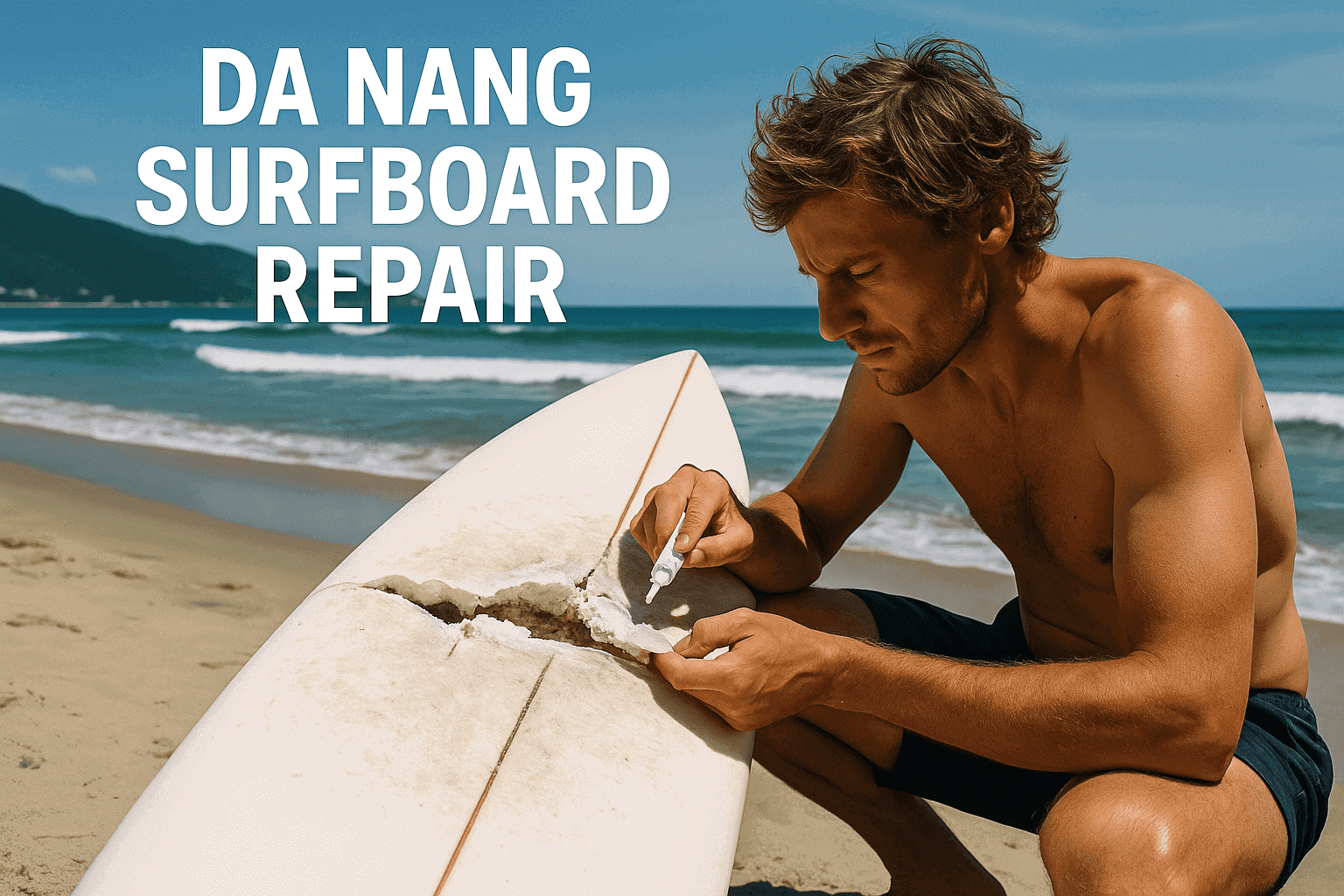

Looking for Da Nang surfboard repair? You’re in the right place.
📍 Da Nang Surfboard Repair: Local Shops & Contacts
| Name | Address | Services | Contacts / Notes |
|---|---|---|---|
| SlicedWaves Surf Repair | Mobile (Da Nang & My Khe area) | Repairs (PU/Epoxy), quick fixes, English & Russian support | 0948770926 (Zalo, Telegram @Ant_rec) Affordable prices, pro materials, English & Russian-speaking, fast response. |
| LST Surf Shop | 10 Mỹ Đa Đông 10, Mỹ An | Repairs, rentals, shaping, pro shop | lstsurf.com +84 90 651 37 29 English-speaking staff, fast repairs, custom boards. |
| Tam’s Pub & Surf | 38 An Thượng 5, My An | Repairs, rentals, cafe, surf info | +84 90 543 43 64 Super-friendly, local legend, great for surf tips, burgers while you wait. |
| CoCo Surf Danang | 282 Vo Nguyen Giap, My Khe | Rentals, repairs (ask at counter) | cocosurfdanang.com Premium boards, quick fixes on request. |
| Surf Shack Da Nang | An Thuong 6 (near My Khe beach) | Rentals, accessories, simple repairs | +84 90 524 87 89 Easy spot, good for small fixes, surf meetups, and advice. |
| Nắng Surf Shop | 45 An Thuong 7 | Rentals, vintage boards, repairs | Boutique vibe, good for longboarders, English-friendly. |
| Da Nang Outdoor Adventures | An Thuong 5 (office) | Rentals, foamie repairs, board delivery | danangadventures.com Budget options, English support. |
Okay, deep breath. You just found the damage—maybe a rail crack after you clipped a curb in An Thuong, maybe a nasty crunch from hitting sandbars at My Khe, or maybe your board didn’t survive that budget airline baggage toss. Whatever it is, you’re standing here now, board in hand, thinking:
Is this fixable? Can I still surf today? Is my trip ruined—or should I just buy a new board right now?
Honestly, boards break all the time. I’ve seen snapped boards put back together and out in the water the next day. I’ve also seen tiny cracks ruin entire boards because someone ignored it for a month. The key here is knowing exactly what you’re dealing with.
Here’s the quick, real-talk checklist:
- Small cracks and dings: Easy fix. Seriously, in Vietnam—especially Da Nang or Mui Ne—it’ll cost you about the same as lunch and you’ll surf again tomorrow.
- Your board is snapped or buckled: Totally repairable (usually), but let’s be real—if it’s a cheap rental or old foamie, buying another might be simpler.
- If your foam feels mushy or heavy: Sorry, but that’s probably game over. Once water gets deep into the foam and stays there, fixing it properly costs more than the board is worth.
In this guide, I’m going to walk you through exactly what’s fixable and what’s not, when you can fix it yourself (and how to avoid the rookie mistakes), and when it’s worth calling a local pro. You’ll learn exactly what to do next, so your surf trip in Vietnam keeps rolling smoothly.
If you’re just getting started, check out our Beginner Surfing in Vietnam guide for tips on choosing a board and your first waves.
🧩 What’s Actually Broken (and Does It Matter)?
When your board gets damaged, the biggest stress is usually not knowing how bad it really is. I’ve stared at a fresh crack myself and wondered: “Is this it? Am I done?” Let’s go through the most common types of surfboard damage and figure out how serious they are, how fast they can be fixed, and what you should do next—especially if you’re here in Vietnam.
🔹 Small Cracks and Dings
If you spot a small crack, a chip on the rail, or a little hole from a knock, the main thing is to check if water can get inside. If you see white foam through the crack or your fingernail can catch on the edge, it’s open.
- What does it mean? Water will start seeping in, making your board heavier and weaker over time.
- Can you surf right now? If you have to get in the water, slap on some ding tape (waterproof surfboard tape), but as soon as you’re out, dry the board and get it fixed.
- How long does it take to repair? Usually a day or two, quick and cheap. In Vietnam (Da Nang, Mui Ne, etc.), expect about 200,000–500,000 VND ($8–20 USD).
🔹 Pressure Dents (Foot Indents)
Every board gets these sooner or later. The more you surf, the more little dents you’ll see. Totally normal.
- How bad is it? Not bad at all! It’s just a sign your board’s being used.
- Do you need to repair it? Not really. Most surfers just wax over them and forget.
- Can you still surf? Yes, absolutely, no problem.
⚠️ Loose Fin Box or Leash Plug
If your fin feels loose or the leash plug is wobbly, this is more serious. It usually happens after a bad hit on rocks or sand, or after a gnarly wipeout.
- Why does it matter? Ignore it, and you risk losing your fin in the water or having your leash pop off right when you need it most.
- Should you paddle out again? Honestly, better not. Get it fixed first.
- How fast and expensive? This is a bit more involved: around 500,000–1,000,000 VND ($20–40 USD) in Vietnam, takes a day or two, but usually done really well.
⚠️ Buckled Board (Crease Across the Board)
If you notice a horizontal crease—a “buckle”—it’s pretty serious. Usually happens after a heavy wipeout, hitting the sandbar, or dropping the board.
- How bad is it? It means your board’s lost a lot of strength and could snap completely on the next good wave.
- Can you surf a little more? Technically, but honestly you’re taking a big risk. It might fold in half any minute.
- Should you fix it? If it’s your favorite board or an expensive one, go for the repair. In Da Nang or Mui Ne, this kind of job runs 700,000–1,500,000 VND ($30–65 USD). But if it’s a rental or a cheap board, maybe start looking for a replacement.
🚫 Snapped in Half
Pretty obvious—your board’s now two pieces. Always a bummer, but not always hopeless.
- Is it the end? Not always. Skilled repair guys can actually bring boards back from this, believe it or not.
- How long and how much? A proper fix in Vietnam costs around 1–2 million VND ($40–85 USD). Takes a bit longer, and the board might feel a bit heavier or stiffer.
- Should you bother? Ask yourself: does this board mean a lot to you? If yes, repair it. If not, it’s probably easier and cheaper to get another, especially if it’s not a high-end board.
⚠️ Delamination (Bubbles or Blisters Under the Glass)
If the top layer starts to bubble or separate, that’s delamination. Caused by water, heat, or impact.
- What’s the risk? The bubble will just keep growing, especially in the sun or if you keep surfing.
- Can you ride it for a while? Maybe, but it’ll only get worse. Best to sort it ASAP.
- Repair cost? Usually about 400,000–1,000,000 VND ($16–40 USD), depending on how big the area is.
❌ Waterlogged or Rotten Foam
If your board suddenly feels super heavy, the foam’s changed color, or it smells funky, it means water has soaked deep inside.
- How serious is this? Unfortunately, this is usually game over. The board is ruined from the inside out.
- Can you repair it? Technically possible, but honestly, it’s not worth it—expensive, slow, and the board will never feel the same.
- What should you do? Time to let go and start looking for a new or good secondhand board.
💸 How Much Does It Really Cost to Fix a Surfboard in Vietnam?
If you’re still unsure what’s going on with your board, take a photo and show it to a repair shop, or send it to us—we’ll help you figure it out. Biggest rule: don’t wait too long. The longer you surf with damage, the worse (and more expensive) it gets.
Small dings — if you get them to a local guy quickly — cost about 200k to 500k.
Fin box repairs or fixing the leash plug is more like 500k to a million.
If you’ve got a big crease across your board (everyone gets one sooner or later), expect anywhere from 700k to 1.5 million.
And yes, even snapped boards can be rescued — for around a million or two, depending on how bad it looks.
Most of these guys work in little workshops a few blocks off the beach. Sometimes you have to wait a day or two, especially in the rainy season or when everyone’s breaking boards at once. (Wondering when to plan your trip for the best waves and quickest repairs? See our Best Time to Surf in Vietnam guide.) But the vibe is good, and half the time, you end up chatting about where the best sandbar was last week.
DIY? Sure, if it’s a tiny ding and you’re handy. Most surf shops stock quick repair kits — ask at the counter, you might have to dig through a basket of wax and leashes to find one.
If you need to rent or repair a board in Da Nang, check our full Surfboard Rental and Repair Da Nang guide for shop locations and service tips.
All in all, fixing your board here is part of the surf routine. You meet people, pick up a few local words, and maybe even get invited for a street coffee while you wait.
🛠️ What You Can Fix Yourself, and When to Go to a Pro

Some repairs really are simple. Others—well, unless you want to learn the hard way (and risk making things worse), it’s smart to let someone experienced take over. Here’s how most surfers I know in Vietnam approach it:
Stuff You Can Usually Fix on Your Own
If you’ve just got a little ding, a tiny chip, or a scratch from hitting a paddle, you don’t have to run to a repair shop. The key is to fix it before water gets inside and starts causing trouble.
What you’ll need:
- A ding repair kit (UV-cure resin like Solarez works great; most surf shops sell it).
- Fine sandpaper or a nail file.
- Some old masking tape or painter’s tape.
- Gloves if you care about your skin.
How it goes:
- Dry your board completely—leave it in the sun if you can (but not too long, or the board can warp).
- Clean around the crack, sand it a bit, and make sure it’s dust-free.
- Squeeze in the resin, spread it thin with a bit of cardboard, and leave it under sunlight for a few minutes.
- That’s it. Peel off any tape, sand smooth if you’re picky.
This will get you back in the water fast.
But remember: DIY is best for small, shallow dings. Anything deep, wide, or near the fins or leash—think twice.
When It’s Time to See a Pro
Here’s when you probably shouldn’t mess around:
- Big cracks, creases, or anything near the rails or stringer — easy to mess up, hard to fix after.
- Loose fin boxes or leash plugs — these need to be set straight and glassed right, or they’ll pop out next session.
- Delamination (when the glass is bubbling up) — needs to be cut out and rebuilt, not just patched over.
- Snapped boards or anything more than a minor break — local repair guys have the right tools and know all the tricks; DIY jobs on these almost never end well.
Most Vietnamese repair guys are used to seeing all kinds of disasters. If you’re unsure, just ask at the shop or send them a photo on Zalo or Messenger. They’ll tell you if it’s worth dropping by, or if you can patch it up yourself.
Common Mistakes (Don’t Do This)
A few things I’ve seen people get wrong:
- Trying to fix a wet board — resin won’t set and water gets trapped.
- Using superglue or random hardware store glue — can actually make pro repairs harder later.
- Ignoring cracks because “it’s just a tiny ding” — those turn into big, expensive problems fast in tropical weather.
Where to Get DIY Repair Kits in Vietnam
Most surf shops in Da Nang, Mui Ne, or Vung Tau keep repair kits behind the counter or near the wax. Sometimes you’ll have to ask.
If you can’t find one, big hardware stores sometimes have epoxy, but make sure it’s for surfboards (not just any construction stuff).
If you’ve never fixed a board before, try it on a beater or rental first. There’s no shame in asking for help. Most of us have learned from watching someone else do it, and a local repair guy will often let you watch the process.
✈️ Board Damage on the Road: Real Vietnam Stories & Smart Fixes
You don’t really learn how fragile a surfboard is until you travel across Vietnam with one. My first time on a night bus to Mui Ne, I figured bubble wrap would be enough. It wasn’t. By sunrise, I found a clean dent in my tail, the driver just shrugged, and a local grom pointed out I should’ve used something softer. In Da Nang, surfers use whatever’s on hand: yoga mats, old towels, or even chunks of sleeping pad taped over the rails. The real veterans grab cheap pipe insulation from hardware stores and slip it over the board’s edges—beats bubble wrap every time.
Out here, most folks have stories about boards that got hammered on buses, trains, or flights. Everyone seems to know someone who’s lost a fin box or had a tail snapped after their bag took a tumble off a van. Local riders will often tape up the fin boxes, even after taking the fins out, just to keep them snug. The lesson? If you’re going to travel, it pays to overpack your rails and keep the bag a little bouncy.
How Locals Handle Surprises
You can tell who’s traveled a lot by their “repair kit.” A battered Ziploc with bits of UV resin, sandpaper, wax, and maybe a bike tire patch or two is standard. A French surfer in Hoi An once patched a rail ding with a tire patch after seeing a Vietnamese kid fix a foamie that way—worked better than expected. Most shops sell quick repair kits, but in a pinch, even a plastic bag, wax, and tape will buy you another surf session or two.
Heat here is another enemy. Boards left in the midday sun or on the roof of a bus can delaminate before lunch is over. Shady spots and big towels are your best friends—some repair guys in Mui Ne keep umbrellas by the door just to cover boards while resin cures. If your board feels heavier after a trip, or you catch a musty smell from the foam, odds are water’s gotten in. Good repairmen have their own tests: a quick tap down the rail, a weight check, or a sniff at the foam—small things that save a board from bigger trouble later.
Local Attitude, Local Help
Most of the best repair guys here work out of small garages, not fancy shops. They usually take cash, not cards. If you’re short on time, just let them know—say you have a bus or flight, and they’ll often make it work for you. Sometimes you’ll end up hanging around, sharing a coffee, watching your board get rebuilt while neighborhood kids peek in and ask about the waves.
Some fixes are truly improvised: I’ve watched a kid seal a cracked rail with a plastic shopping bag, surf wax, and a mess of electrical tape. It looked terrible, but he was back in the lineup for the next three days until the swell died off.
In the end, board disasters are annoying, but they become part of your Vietnam story. The way people fix boards here—sometimes beautifully, sometimes with whatever’s lying around—makes you appreciate both the waves and the people who ride them.
🌞 How to Actually Care for Your Board in Vietnam
1. Never leave your board in the sun.
A few minutes on the sand at midday is enough to cause bubbling or fading, especially in Da Nang or Mui Ne. Always stash your board in the shade or cover it with a towel, shirt, or anything you have.
2. Rinse off salt and sand every session.
Saltwater eats into small cracks and makes dings worse fast. Use beach showers, your own water bottle, or whatever’s handy. Don’t skip this step, especially in the tropics.
3. Dry your board before packing it away.
If you put a wet board into its bag, especially in humid weather or during rainy season, you risk mold and that nasty smell. Let it air dry in the shade first.
4. Protect your rails and fins during transport.
Scooter racks and bus rides will scratch or dent your board unless you pad the contact points. Old t-shirts, rags, or even bits of foam work—don’t overthink it, just make sure there’s a layer.
5. Don’t rest your board on hot metal.
Scooter racks, car roofs, and even sidewalks get hot enough to damage the glass or melt the foam inside.
6. Don’t ignore small dings or soft spots.
What looks minor in California can get worse fast in Vietnam’s heat and humidity. Fix it or tape it before your next session.
7. If you see mold or a weird smell, clean it with alcohol or vinegar.
Let it dry completely before using or storing it again.
📚 Stories from the Lineup: Real Repairs in Vietnam & Beyond
Snapped at My Khe, Back in the Water by the Weekend
Last season, a French backpacker tried his first overhead day at My Khe and got tossed onto the inside sandbar. His board came up in two clean pieces. Everyone at the lineup thought, “That’s it, new board time.” But he found a local repair guy (through a surf hostel), dropped off both halves, and paid just 600,000 VND — about $25. Two days later, he was back out, smiling, with a slightly heavier but rideable stick. He surfed it the rest of his trip and says it still rides “like a tank, but it floats!”
Rookie Mistake: Waxing Over a Ding
A new expat tried to hide a small crack on his rail by just waxing over it and kept surfing every day. Two weeks later, his board was noticeably heavier and started smelling off. Turned out, water had soaked into the foam and a simple repair became a full strip-and-dry job. Lesson learned: always dry and patch a ding, even if it looks minor. The tropical heat here turns “not a big deal” into “why did I ignore that?” real quick.
Local Wisdom: Sun Can Fix, and Also Destroy
There’s an old Da Nang joke: “If the waves don’t fix your problems, the sun will.” It’s true — UV-cure resin is a lifesaver for quick ding fixes on the beach. But more than once, I’ve seen travelers leave boards to “dry” in the midday sun, only to come back to a warped or bubbled deck. One local shaper even keeps a timer: five minutes max for resin cures, any longer and you risk delam. His advice? Sun is your friend for repairs, but your enemy if you forget your board.
Want to explore more surf spots after your board is fixed? See our Vietnam Surf Spots guide.
❓ FAQ – Da Nang Surfboard Repair
How much does it cost to repair a surfboard in Vietnam?
Simple ding repairs usually cost 200,000–500,000 VND ($8–20 USD). Fixing a fin box, leash plug, or more serious damage runs 500,000–1,500,000 VND ($20–65 USD). A snapped board can be rebuilt for 1–2 million VND ($40–85 USD).
Can you fix a cracked board yourself?
If it’s a small crack or ding and you have a UV-cure repair kit, yes—you can do it in under an hour. Anything deep, wide, or near the fins or leash plug is better left to a pro.
Are pressure dents dangerous?
No. Pressure dents from your feet are mostly cosmetic. You can keep surfing as usual.
How long does it take to fix a board?
Most basic repairs take 1–2 days. Big jobs (like snapped boards or major delam) may take 3–5 days. During busy season, allow a little extra time.
Is it worth repairing a snapped board?
If it’s your favorite or a high-end board, yes—a good repair can get it back in the water. For rentals or cheap boards, sometimes it’s better to buy or rent another.
Where can I buy repair kits in Da Nang?
Most surf shops in My Khe and An Thuong carry ding repair kits behind the counter. If not, check bigger hardware stores, or ask a local repair guy—they often sell small kits themselves.
Can you surf with a ding?
If it’s tiny and you seal it with ding tape, maybe for a session. But it’s always better to fix it properly ASAP. Water damage can ruin your board fast in tropical climates.
Do airlines pay for board damage?
Sometimes. Always check your board at baggage claim, report damage immediately, and take photos for your claim. Some travel insurance will cover repairs—save receipts and paperwork.
If your board’s got a crack, a ding, or just needs a check-up, swing by the shop or send us a photo (0948770926 Zalo, Telegram @Ant_rec, whatever’s easier). Even if you’re not sure how bad the damage is, we’ll take a look and let you know what’s possible. Sometimes it’s a ten-minute fix, sometimes it needs a little more work—but either way, you’ll get honest advice, no pressure, and probably a story or two from the last stormy swell.
If you’re not in our area, just drop a message—we know repair folks all along the coast, and can usually point you to someone nearby who knows what they’re doing.